

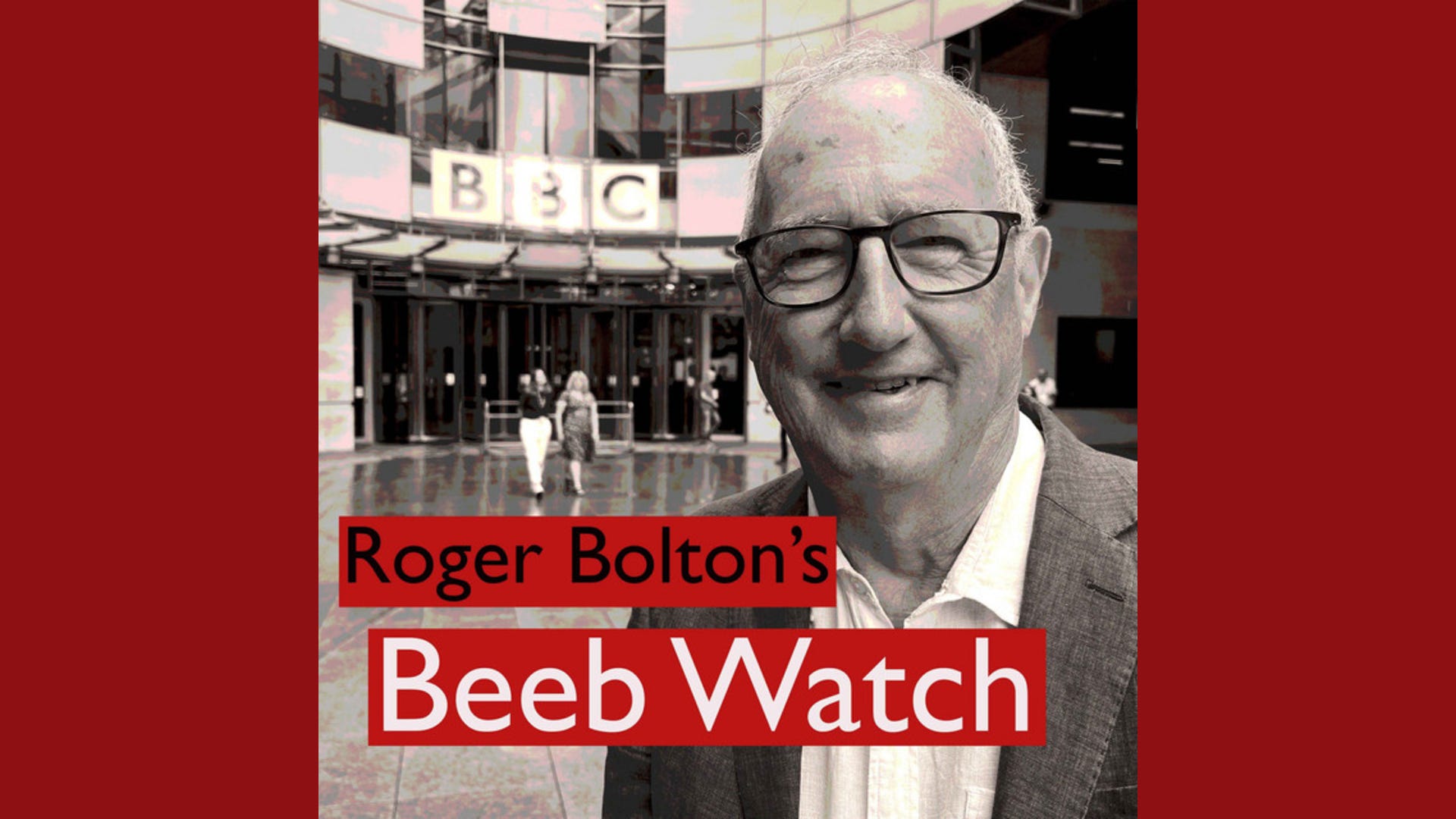
Welcome to the Media Society Substack. In this edition, Roger Bolton, presenter of the Beeb Watch podcast, argues that there is not enough public debate about the BBC’s content and funding.
The Media Society Substack covers current media issues, and includes articles written by leading practitioners and experts in the world of media.
What’s the BBC for?
On the Laura Kuenssberg programme last Sunday, the presenter had two guests who had no answers to some key questions.
Our new Prime Minister, Andy Burnham, did have a vision, for an NHS-style social care system for England, but he could not say, or was unwilling to reveal, how it was to be paid for (although in his speech to the Labour Conference on Tuesday he did give us a little more detail).
The BBC Director General, Matt Brittin, had plenty to say about the Corporation’s present cash crisis, and the scale of cuts which will inevitably follow, though nothing about the principles behind such cuts. He was also clear about the different ways BBC content needed to be distributed in the future, for example by Netflix and YouTube, but he was not forthcoming about what that content would or could be.
Mr Brittin appeared to have no vision of the role public service broadcasting or media could serve our society in the future. Nor did he indicate what he intended to preserve and what to lose from the present output, and why. The BBC had to give everyone something, he said, although the rolling cuts would indicate that there will be less and less of everything.
As a consequence, licence fee payers may well see the programmes they care about disappear without consultation, while they have to pay for programmes they do not want.
We are told it is ‘Our BBC’ but in what way? We have, in effect, taxation without representation, less important when there is enough for every taste but increasingly unsupportable when output is squeezed year after year.
It was this potentially disastrous situation that my Beeb Watch podcast hoped to help avoid.
When I was ‘retired’ from presenting the Radio 4 Feedback programme four years ago, after over 20 years (a perfectly reasonable decision by the BBC but coldly carried out) I thought my broadcasting days had come to an end, but my Feedback producer Kate Dixon had other thoughts.
We were both passionate about public service broadcasting and frustrated by the limitations of the programme. We could not oblige BBC executives and producers to appear, and many refused to do so, refusing to be answerable to the people who paid their not inconsiderable salaries. It was frustrating having only endless statements to read, which were a poor substitute to live interviews.
We felt we were letting the audience down. The series essentially dealt with issues related to programmes that had already been transmitted or current public policy statements and controversies. Quite properly we had to follow the audience’s agenda but this meant there was no way we could deal satisfactorily with the real debates we knew were going on within the building which would not become public until later, if at all. We wanted to involve the public in major strategic decisions before they were made - not afterwards when they could not be changed.
We were convinced there was a ‘democratic deficit’ and did not think the BBC Board, in particular, was fully representative of the country. We thought the Beeb Watch podcast might be able to ventilate some of these issues. The clincher was that we knew that the BBC Charter was up for renewal at the end of 2027, and that the BBC’s finances were worsening by the day.
We wanted the podcast to be the place where we could explore, not just how the BBC could survive as a big business, or how it was to be paid for, but WHAT THE BBC WAS FOR in a very different media landscape than existed even ten years ago.
When I joined the BBC in the 60s there were only three TV channels, then along came Channel 4, then Channel 5. Now there are hundreds, if not thousands, many producing world class programmes. What distinctive public service offering was now possible and needed, and was the BBC fit for purpose to offer it? In particular, we wanted to ensure that BBC Radio was not left out of the discussions, though it rarely seemed to be mentioned by BBC bosses.
We have had some success.
Former DGs like Sir Mark Thompson and (Lord) Tony Hall, former ministers like Sir John Whittingdale, and the Chairs of Parliamentary backbench committees, academics, and campaigners have all willingly talked to us at length and for no money. (We haven’t any and do it all gratis). Very distinguished journalists and broadcasters like David Dimbleby and Max Hastings have also taken part. Guess who is missing?
No current BBC executive or Board member would participate. The BBC would not even give us background briefings, even though I frequently went on GB News and TalkTV, avowed enemies of the Corporation, to defend and explain its actions in the face of unfair criticism.
So here we are at five minutes to midnight with no proper public debate about what public service content we want, whether the BBC is best placed to deliver it, and how it should be paid for.
Anyone who thinks the Chancellor’s upcoming budget will ride to the rescue with a significantly increased licence fee is living in Cloud Cuckoo Land. The Culture Secretary has failed to lead a national debate about public service content. The BBC has so far failed to give us a vision of what it could do.
We could have discussed with decision makers the need, and potential, for local journalism, for popular science programmes, for the arts and religious programmes which would help us understand each other and the world better, and explore the way new technologies have opened up exciting opportunities which could be exploited by public/private partnerships.
Instead, the discussions about the future of ‘our’ BBC are being decided behind closed doors.
We won’t give up yet.
Our Beeb Watch podcast will continue to explore these issues, and who knows, pigs might fly, and Matt Brittin and Lisa Nandy may come on, explore their exciting visions for the future of public service content, and then set out a series of consultations in which the public really does have a chance of influencing the future shape of our public service media and what they can provide.
Meanwhile Kate Dixon (who does most of the hard work) and I will keep going until they pull out the plugs.
About the Author
Roger Bolton is a former BBC executive who presented Channel 4’s Right to Reply series and BBC Radio 4’s Feedback and Sunday programmes. Find out more about his Beeb Watch podcast here.
The Media Society is a British charity that organises events that discuss and debate important and topical media issues.
Join the Media Society - and help us with our work, and, at the same time, receive valuable benefits. Find out more about joining here.
Here is the news — the BBC keeps making cuts in the news!
I agree that there is not really that much of a proper nationwide public debate going on about the future of the BBC, which there should be.
What has annoyed me over the last few years is that hundreds of jobs have been cut in News and Current Affairs in waves of announcements- when news and current affairs is precisely what a BBC in the current media landscape should be INVESTING in.
Before the streaming and social media explosion, the BBC tried to provide “something for everyone” because it felt you had to reach the vast majority of the population in order to justify the licence fee.
But now, in the age of infinite content, I’m not sure this is the argument anymore.
The debate should be about what are the things that we want to preserve about the BBC for the benefit of society - and excellence in news coverage and current affairs is surely one of them. As a small example, I would not have diluted Newsnight because it was only the BBC that was doing an in-depth, serious, well-resourced nightly current affairs programme of that type.
The BBC also has a history of salami-slicing in regional journalism and local radio stations. This is also wrong, because in many communities the BBC local radio stations should be the stand-out purveyors of news, information and debate, especially given that local “newspapers”, or their online versions, have also been massively cut in the last decade because of huge falls in advertising revenue.
When consumers can get everything, everywhere, all of the time, the BBC should concentrate more on what delivers the greatest value to the nation in a world where impartial broadcasters are the most reliable truth tellers.
To be clear, I don’t mean scrap Traitors, because that programme does create national conversation and genuine water cooler conversations.
But the BBC’s priorities need to be more clearly defined than I personally think they are right now.
The lack of transparency, as you highlight, is counterproductive given the BBC’s need to carry public opinion with them for the major changes they undoubtedly have to make.